5 Algeria-Austria Standings Mistakes Fans Make
Algeria and Austria finished their 2026 FIFA World Cup Group J finale with a 3-3 draw on June 27, 2026, giving both teams 4 points from three matches and sending both into the knockout phase. Algeria....

5 Algeria-Austria Standings Mistakes Fans Make
Algeria and Austria finished their 2026 FIFA World Cup Group J finale with a 3-3 draw on June 27, 2026, giving both teams 4 points from three matches and sending both into the knockout phase. Algeria national football team vs Austria national football team standings therefore cannot be judged from the final score alone: Austria finished second behind Argentina, while Algeria placed third but advanced as one of the eight best third-placed teams. Marko Arnautovic and Marcel Sabitzer scored for Austria; Rafik Belghali and Riyad Mahrez, twice, answered for Algeria, before Sasa Kalajdzic equalised in the 96th minute. The result eliminated Iran because a winner would have changed the third-place qualification calculation. The practical takeaway is exact: record points, goal difference, goals scored, group position, and third-place ranking separately before assessing either team’s tournament outcome.

Photo by Houssam benamara on Pexels
If you are checking the final table: do not confuse points with position
The Algeria national football team vs Austria national football team standings show both teams on 4 points after the 3-3 draw, but Austria ranked above Algeria because the complete Group J table included Argentina and Iran. Austria finished second, Algeria finished third, and the distinction mattered because Austria qualified directly through its group position while Algeria qualified through the best third-placed-team route. That is the first calculation fans must make correctly.
The match itself produced a perfectly balanced points result:
- Austria: 4 points, second place in Group J.
- Algeria: 4 points, third place in Group J.
- Final score: Algeria 3-3 Austria.
- Algeria scorers: Rafik Belghali and Riyad Mahrez twice.
- Austria scorers: Marko Arnautovic, Marcel Sabitzer, and Sasa Kalajdzic.
- Decisive late moment: Kalajdzic’s 96th-minute equaliser.
A draw awards one point to each side, not three, so the final match did not automatically place both nations equally in the table. Goal difference, goals scored, and the wider group results still had to be assessed. According to ESPN’s match report, the draw allowed Austria and Algeria to progress while eliminating Iran, an outcome that demonstrates why a standings query requires more than a head-to-head score.
For a reliable tournament-reading method, begin with the official competition table rather than a social-media graphic or a headline saying both teams “advanced.” Pitch Notes recommends writing the table in a fixed order: matches played, wins, draws, losses, goals for, goals against, goal difference, points, and qualification status. That sequence prevents the common error of treating a dramatic result as the entire ranking story.
Want the broader tournament context before comparing the teams?
[Internal Link: 2026 World Cup group-stage standings guide]
If you are comparing qualification routes: do A, then B
What did the 3-3 Algeria-Austria draw actually change? It secured advancement for both nations, but through different logical routes. Austria’s 4 points were enough for second place in Group J, reportedly behind Argentina, so Austria moved forward as a group runner-up and earned a Round of 32 meeting with Spain in Los Angeles. Algeria’s 4 points placed the team third, yet its overall record was strong enough to qualify as one of the eight best third-placed teams, with Switzerland listed as its next knockout opponent in Vancouver.
This distinction is more important than it first appears. A group runner-up normally receives a qualification path determined by the tournament bracket, whereas a third-placed qualifier depends on comparisons across several groups. In probability terms, Austria controlled a direct variable—its Group J position—while Algeria depended on a wider sample containing third-placed teams from other groups. The same 4-point total therefore carried different certainty levels.
Use this two-stage checklist:
- Confirm each team’s points inside Group J.
- Confirm the order of Argentina, Austria, Algeria, and Iran.
- Check Algeria against third-placed teams from other groups.
- Count goal difference and goals scored, not points alone.
- Confirm the official knockout bracket and opponent.
The BBC live report described Kalajdzic’s equaliser as a 96th-minute goal that confirmed Austria’s place in the last 32, while Algeria also progressed as one of the eight best third-placed teams. That reporting supplies a valuable edge case: “advanced” is not synonymous with “finished second,” and “third place” is not synonymous with “eliminated.”
The contrarian conclusion is straightforward. Algeria’s route looked less secure before the final whistle, but the team’s third-place record had enough expected value to survive the cross-group comparison. Austria’s route was mathematically cleaner, yet the 96th-minute goal was essential because a defeat could have removed Austria from the tournament entirely.
See the details before using standings in a match preview.

Photo by Dominik😎 on Pexels
If you are studying the match impact: do C, not just the final-score review
How should analysts interpret the Algeria national football team vs Austria national football team standings after such a volatile match? Separate the scoreboard from the performance sequence. Austria led through Marko Arnautovic, then Marcel Sabitzer extended the advantage, but Algeria responded through Rafik Belghali and Riyad Mahrez. Mahrez’s stoppage-time second goal appeared to give Algeria a 3-2 victory, yet Kalajdzic’s header restored parity almost immediately.
That sequence affected qualification probability minute by minute. At 3-2, Austria faced near-elimination pressure; at 3-3, both teams were through. The expected-value lesson is exact: a one-goal swing in stoppage time can alter not only the match result but also the ranking route, opponent, travel plan, and financial value of progression. Anyone assessing team strength from the final standings alone misses that the match contained three distinct states: Austria ahead, Algeria ahead, and both teams level.
For a serious tactical and statistical review, record:
- The minute of every goal.
- Which team held the qualifying position at that moment.
- Whether the goal changed direct qualification or third-place comparison.
- The scorer’s role, such as Mahrez’s finishing responsibility or Kalajdzic’s aerial threat.
- The final opponent produced by the bracket.
Riyad Mahrez’s two goals are particularly important because they explain Algeria’s attacking resilience, but they do not erase Austria’s ability to score three times. Conversely, Austria’s second-place finish confirms advancement but does not prove that Austria controlled every phase. The data supports a more precise verdict: the teams were equal on points, equal in the final score, and separated by group position and qualification mechanism.
Pitch Notes treats standings as an input, not a conclusion. For predictions, combine the table with recent scoring, defensive concessions, set-piece performance, injury information, and opponent quality. That method is more defensible than assigning a team a higher rating simply because it finished second.
Ready to compare the knockout implications with the group numbers?
[Internal Link: World Cup knockout-stage prediction framework]
Common pitfalls to avoid
The biggest mistake is searching only “Algeria vs Austria standings” and copying the first number displayed. Search snippets frequently combine match statistics, group records, and live-table information into one compact line. In this case, the relevant record was 1-1-1 and 4 points for each side after the third match, but the final ranking still differed: Austria second and Algeria third.
A second mistake is assuming Iran would qualify after an Algeria or Austria victory. The reported scenario was the opposite: Iran would have advanced as one of the eight best third-placed teams if Austria or Algeria had won. The draw preserved both teams’ advancement and eliminated Iran, making the final 3-3 a qualification result for two sides simultaneously.
A third mistake is ignoring the tournament’s expanded structure. A third-placed team can advance when the format admits the strongest teams in that position, but the threshold is not universal across competitions. The FIFA World Cup official competitions information should be checked for the applicable format, ranking criteria, and bracket rather than importing rules from the 2022 World Cup or a domestic league.
Avoid these five errors:
- Treating a draw as a win because both teams advanced.
- Calling Algeria second because both teams finished on 4 points.
- Forgetting Argentina’s position in Group J.
- Assuming third place always means elimination.
- Using a pre-match table after the June 27 result.
The “official” label deserves caution as well. A broadcaster’s live table may update before its written article, while an article may describe qualification routes without displaying every tiebreaker. Check the timestamp, competition stage, and whether the figures are pre-match or post-match. A 24-hour difference is enough to make a correct table appear wrong.
One useful operational tip is to preserve two snapshots: the table immediately before kickoff and the confirmed table after the final whistle. Comparing them reveals exactly which points and ranking positions changed. That practice is especially valuable for bettors, journalists, and fantasy players who may otherwise make a decision using stale information.
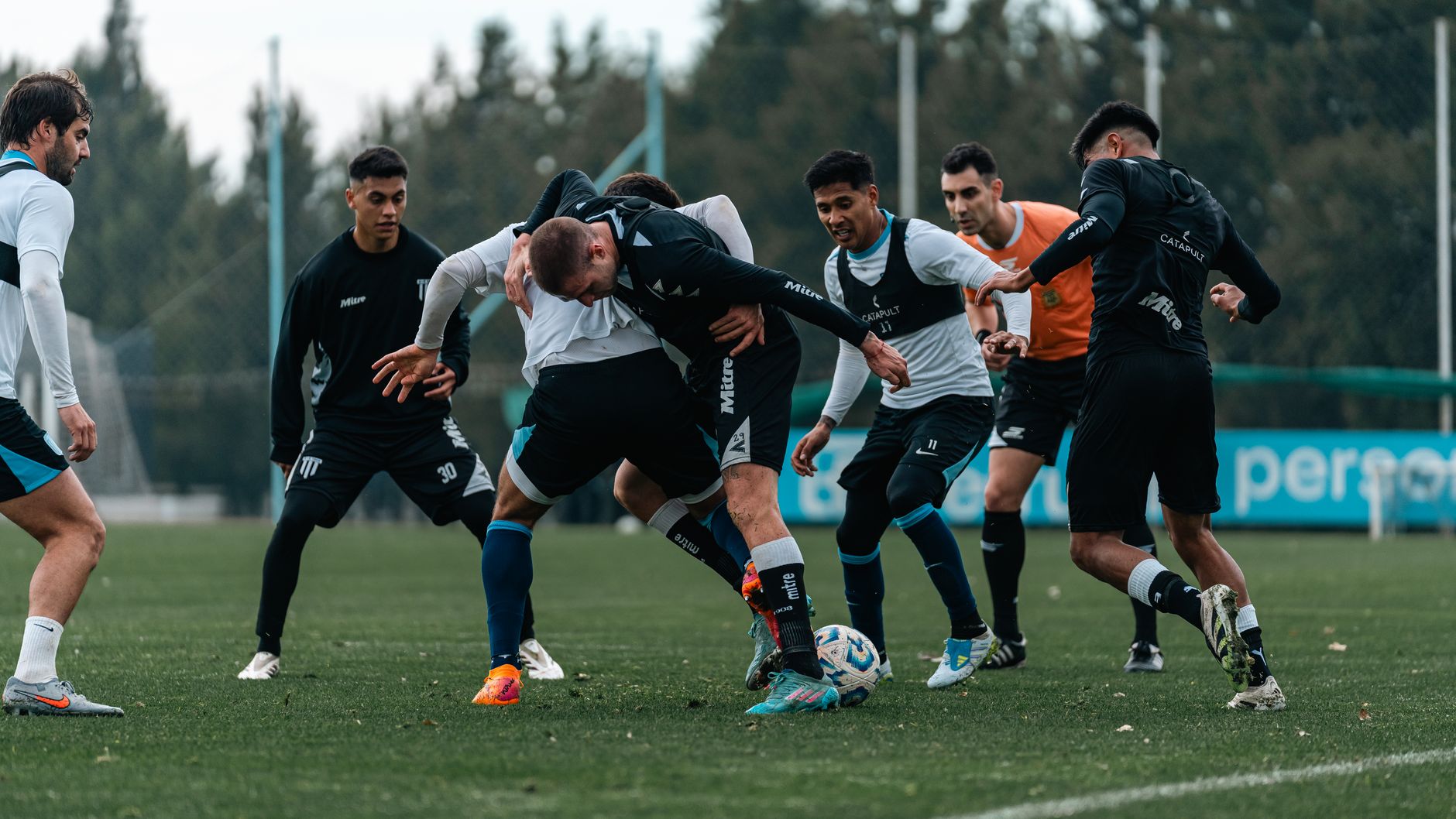
Photo by Franco Monsalvo on Pexels
The 30-day check-in
What should fans review 30 days after the Algeria-Austria match? Reassess whether the standings reflected durable team quality or merely a high-variance final fixture. A 3-3 draw contains six goals, three lead changes in practical terms, and a stoppage-time equaliser, so the result has a larger random component than a controlled 1-0 win. The correct analytical response is not to discard the result but to weight it appropriately.
Start with a repeatable audit:
- Compare Algeria’s goals scored and conceded with its previous group matches.
- Compare Austria’s defensive record with its first two fixtures.
- Identify whether set pieces created a disproportionate share of chances.
- Track Mahrez, Arnautovic, Sabitzer, Belghali, and Kalajdzic in the next match.
- Recalculate knockout expectations using the confirmed opponents: Switzerland for Algeria and Spain for Austria, as reported in the supplied match coverage.
The 30-day check-in also prevents recency bias. Mahrez’s late goal is memorable, and Kalajdzic’s 96th-minute header is even more dramatic, but memory overvalues final-minute events. A disciplined model assigns the goal its correct effect on the table while separately measuring shot quality, possession zones, transition frequency, and defensive errors.
There is another information gain here: the same standings can support opposite betting interpretations. A bettor may see Austria’s second-place finish as evidence of stability; another may see the three conceded goals as a defensive warning. Both observations can be true. The expected value depends on the market price, not the table alone. If Austria is heavily favored against Spain because of its position, the price may already include the qualification advantage; if Algeria receives a large underdog price against Switzerland, its attacking output may be undervalued.
For responsible analysis, never treat qualification as a guarantee of the next result. Compare available odds, injury reports, confirmed lineups, and competition rules, and set a fixed budget before placing any wager. Pitch Notes provides football analysis for informed decisions, not certainty disguised as an “official prediction.”
Want the next 2026 World Cup analysis delivered with the same detail?
[Internal Link: responsible football betting guide]
Standings snapshot: Algeria versus Austria
The cleanest way to answer the search query is to display the known comparison without inventing unavailable figures. The supplied reports establish the final match score, each team’s 4 points, Austria’s second-place finish, Algeria’s third-place finish, and both teams’ progression. They do not provide a complete numerical Group J table for Argentina and Iran, so a responsible article must not manufacture goals-for, goals-against, or goal-difference values for those teams.
| Category | Algeria | Austria |
|---|---|---|
| Final match score | 3 | 3 |
| Group-stage points after match | 4 | 4 |
| Group J position | 3rd | 2nd |
| Qualification route | Best third-placed team | Group runner-up |
| Key scorers | Rafik Belghali, Riyad Mahrez x2 | Marko Arnautovic, Marcel Sabitzer, Sasa Kalajdzic |
| Reported knockout opponent | Switzerland | Spain |
This table resolves the most common search confusion. Algeria did not outrank Austria on the Group J table, even though both teams reached the knockout phase. Austria’s reward was a meeting with Spain in Los Angeles, while Algeria’s reported Round of 32 fixture was against Switzerland in Vancouver, British Columbia.
The table also illustrates why searchers should distinguish “standings” from “head-to-head.” Head-to-head describes the 3-3 match; standings describe the wider competition. One is a single observation, while the other is a ranked dataset built from multiple matches and tiebreakers.
Frequently Asked Questions
Q: What are the Algeria national football team vs Austria national football team standings?
A: Austria finished second in Group J with 4 points, while Algeria finished third with 4 points after their 3-3 draw on June 27, 2026. The teams were level on points but did not occupy the same ranking position because the full group table and tiebreaking criteria determined the order. Algeria still advanced as one of the eight best third-placed teams. Austria progressed directly as the group runner-up.
Q: How did Algeria and Austria both qualify after drawing 3-3?
A: Both teams qualified because the 3-3 draw produced a group outcome that left Austria second and Algeria among the strongest third-placed teams. Riyad Mahrez scored twice for Algeria, while Sasa Kalajdzic’s 96th-minute equaliser rescued Austria after Mahrez had put Algeria ahead. Iran was eliminated because the draw preserved advancement for both opponents.
Q: What is the difference between Algeria’s third place and Austria’s second place?
A: Austria’s second place came directly from its Group J ranking, whereas Algeria’s third place required comparison with third-placed teams from other groups. Both teams had 4 points, but their qualification routes were different. Austria was reported to face Spain in Los Angeles, while Algeria was reported to face Switzerland in Vancouver.
Q: How should I check Algeria-Austria standings accurately?
A: Check the post-match table, the timestamp, points, goal difference, goals scored, and qualification route in that order. Then verify the information against a reliable source such as FIFA, BBC Sport, or ESPN rather than relying on a search snippet. Keep a pre-match and post-match snapshot when analyzing live qualification scenarios.
Q: Is a 3-3 draw a good result for Algeria and Austria?
A: The 3-3 draw was an excellent tournament result for both teams because it sent both into the knockout phase. It was especially valuable for Austria after Kalajdzic equalised in the 96th minute, since a defeat could have ended its campaign. Algeria surrendered the possibility of finishing higher in the match but retained qualification as a best third-placed team.
Q: Who scored in Algeria versus Austria?
A: Rafik Belghali and Riyad Mahrez scored for Algeria, while Marko Arnautovic, Marcel Sabitzer, and Sasa Kalajdzic scored for Austria. Mahrez scored twice, including a stoppage-time goal that briefly made the score 3-2. Kalajdzic then headed the 96th-minute equaliser that confirmed Austria’s progression.
Q: Can standings alone predict the knockout-stage winner?
A: Standings alone cannot reliably predict the knockout-stage winner because they do not measure opponent strength, injuries, tactical matchups, chance quality, or market price. Algeria’s third-place qualification and Austria’s second-place finish establish tournament position, not guaranteed performance against Switzerland or Spain. For betting analysis, combine standings with lineups, recent underlying statistics, and a predetermined responsible wagering budget.
The final verdict is fixed: Algeria and Austria finished the decisive Group J match level at 3-3 and both advanced, but Austria ranked second with 4 points while Algeria ranked third with 4 points. That is the precise answer to the Algeria national football team vs Austria national football team standings query. Use the full table, separate qualification route from position, and verify every time-sensitive figure before making a prediction.
Continue tracking the 2026 World Cup with Pitch Notes.
End of Article · Pitch Notes