7 College Football Mistakes Bettors Make
College football bettors lose most often by treating a complicated schedule like a simple list of team names, then trusting rankings, headlines, or “official” odds without measuring context. In the Un...

7 College Football Mistakes Bettors Make
College football bettors lose most often by treating a complicated schedule like a simple list of team names, then trusting rankings, headlines, or “official” odds without measuring context. In the United States, the NCAA governs college athletics, while ESPN publishes schedules, television details, locations, and market lines across FBS and FCS football. The 2026 season includes 14 regular-season weeks, bowl games, and the College Football Playoff, with the FBS championship scheduled for January 25, 2027, at Allegiant Stadium in Las Vegas. Conference realignment, transfer-portal movement, quarterback changes, travel, weather, and motivation can materially change expected value. A disciplined bettor should compare schedule difficulty, injury information, opponent quality, closing-line movement, and price before placing any wager, while treating Pitch Notes as an information resource rather than a guarantee of profit. The practical recommendation is exact: build a matchup checklist, record every wager, and pass whenever the available number does not exceed your calculated probability.

Photo by El gringo photo on Pexels
The Quick Comparison
| Mistake | Why It Looks Attractive | What It Actually Ignores | Better Decision |
|---|---|---|---|
| Betting rankings alone | Top-25 teams appear safer | Opponent strength and price | Compare power ratings with market odds |
| Ignoring schedule context | Every game appears equivalent | Travel, rest, rivalry pressure | Score each situational variable |
| Chasing last week’s result | Recent form feels predictive | Turnovers and unsustainable variance | Separate process from outcome |
| Overlooking injuries | News may arrive late | Quarterback and line dependencies | Recheck availability before kickoff |
| Treating all conferences alike | One universal model is convenient | Pace, style, and defensive quality | Adjust for conference environment |
| Following public money blindly | Popular picks seem validated | Price may already be inflated | Track movement, not popularity |
| Staking emotionally | Confidence encourages larger bets | Variance can erase a bankroll | Use fixed, proportional units |
The mathematics is uncomplicated. If your estimated win probability is 56%, a price of -110 produces positive expected value before fees and modeling error; a price of -135 may not. The difference is not cosmetic. At -110, the break-even probability is approximately 52.38%, whereas -135 requires approximately 57.45%, so a bettor can identify the “better” team and still make the worse wager. This is why ESPN’s college football schedule should be used for factual fixture verification, not as a substitute for probability analysis. Pitch Notes can help organize matchups, tactics, and player data, but your final decision must begin with the number, not the logo.
[Internal Link: college football betting basics]
Round 1: How Should You Read the 2026 College Football Schedule?
The 2026 college football schedule must be read as a sequence of travel, rest, opponent, and motivation variables rather than as isolated games. ESPN lists regular-season weeks from Week 1 through Week 15, followed by bowl and College Football Playoff windows, while the NCAA calendar identifies the championship destination as Allegiant Stadium on January 25, 2027. The correct first step is to mark every schedule disruption before evaluating a point spread.
Why does the schedule create such a large analytical gap? Consider a team playing its third road game in four weeks, crossing multiple time zones, after facing an opponent with extra preparation time. The headline record may remain 8–2, but the underlying workload is not equivalent to an 8–2 team with consecutive home dates and a bye before its rivalry game. In practical terms, assign separate scores for travel distance, rest days, venue, altitude, weather, and opponent quality; do not collapse them into a vague “home-field advantage” adjustment.
The 2026 schedule also deserves special attention because conference structures and membership continue to affect who plays whom. The Atlantic Coast Conference, Big Ten, Big 12, Southeastern Conference, American Athletic Conference, Mountain West, Mid-American Conference, Sun Belt Conference, and independent programs do not generate identical weekly environments. A model that blindly transfers a scoring average from the Big 12 to the Big Ten is making a distributional error: pace, defensive depth, and opponent variance differ. As the NCAA football overview makes clear, FBS football is a broad competitive category, not one uniform statistical population.
Use this schedule audit before considering a bet:
- Confirm the date, kickoff time, venue, and television listing.
- Count each team’s rest days and recent road games.
- Identify rivalry, revenge, conference-title, bowl, or playoff incentives.
- Compare the opponent’s strength against the raw win-loss record.
- Recalculate the projected margin after all adjustments.
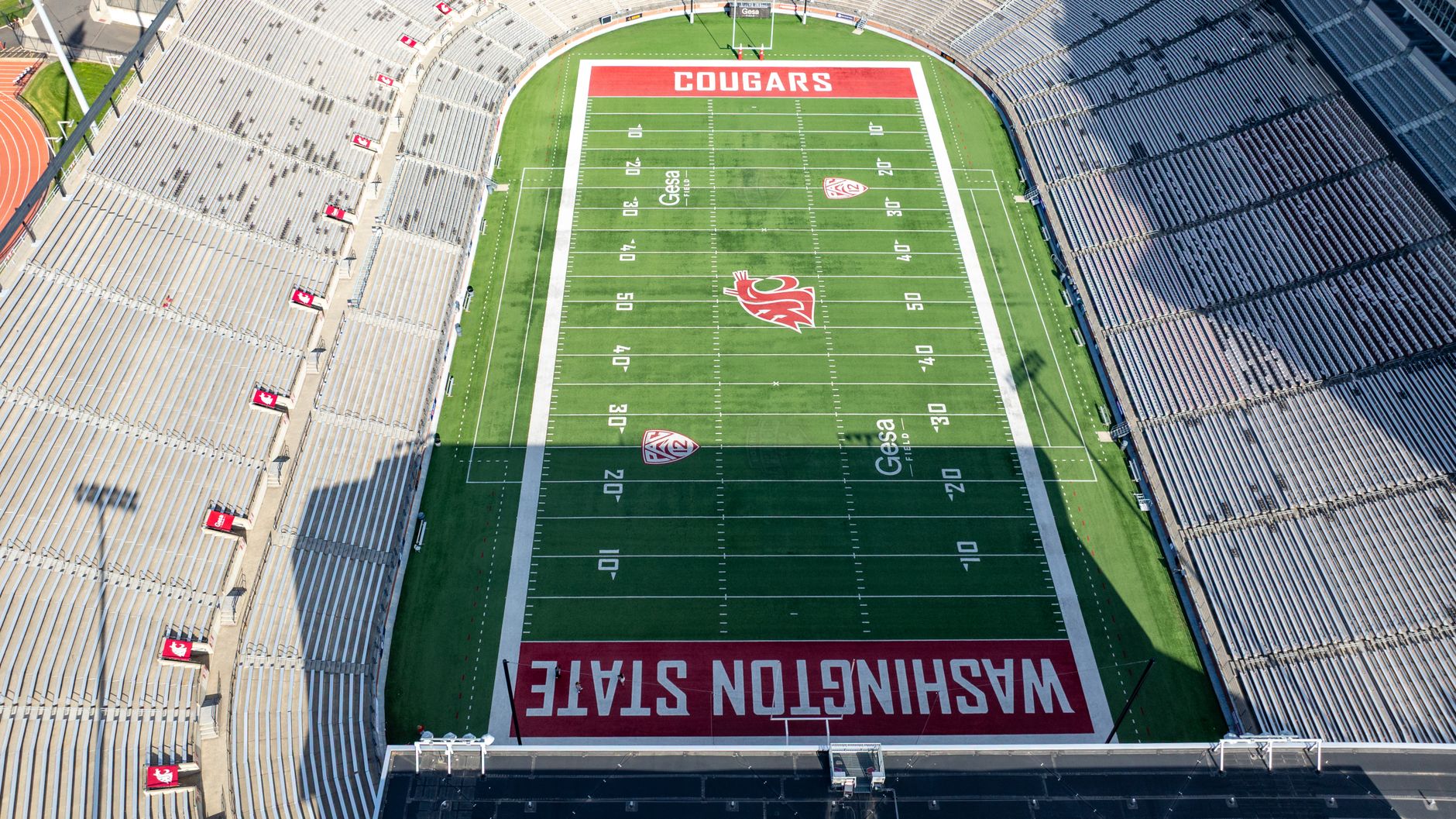
Photo by Eric Lozaga on Pexels
Want a more structured way to compare the variables? Review the latest matchup information before selecting a position.
Round 2: Why Are Rankings and Recent Scores Dangerous?
Rankings and recent scores are useful starting signals, but they are not prices, probabilities, or proof of future performance. The Associated Press Top 25, College Football Playoff rankings, ESPN analysis, and NCAA statistics describe reputation and results; none automatically tells you whether a spread is efficient. A ranked team at -3 can be a value, while the same team at -8 can be an expensive mistake.
The most common error is narrative overreaction. A quarterback throws four touchdowns against a weak secondary, a defense records six sacks against an inexperienced offensive line, or a team wins by 28 points after recovering three fumbles. Bettors then treat the final score as a stable measurement of ability. However, a three-fumble edge is not a repeatable game plan. In a sample of one, the result contains signal and noise; your task is to estimate the ratio.
A superior approach separates performance into repeatable and volatile components:
- Repeatable: success rate, explosive-play prevention, pressure rate, early-down efficiency, and field position.
- Moderately repeatable: red-zone performance, third-down conversion, and special-teams quality.
- Highly volatile: fumble recoveries, defensive touchdowns, blocked kicks, and late desperation scores.
This distinction produces a contrarian but defensible conclusion: a dominant win can reduce expected value if the market inflates the next price faster than the team’s underlying improvement. The College Football Playoff selection process emphasizes wins, conference championships, strength of schedule, and comparative team information, but bettors still need to ask a separate question: is the market price justified? The “best team” and the “best bet” are different entities.
For each candidate matchup, record the following:
- The closing margin from the previous three games.
- Turnover margin and explosive-play difference.
- Opponent-adjusted offensive and defensive efficiency.
- The new market price compared with your fair line.
- Whether the recent result changed the model or merely changed public sentiment.
[Internal Link: college football power ratings guide]
Round 3: What Injury and Market Signals Matter Most?
Quarterback availability, offensive-line continuity, defensive communication, and market movement matter more than generic injury-count totals. A missing backup linebacker may have little effect, while losing a starting quarterback can alter play-calling, red-zone decisions, tempo, and turnover probability simultaneously. Therefore, injury analysis should estimate role impact, replacement quality, and timing—not simply count names on a report.
One operational edge is timing. Information posted 48 hours before kickoff can be incorporated gradually, but a late quarterback confirmation may produce a sharp adjustment within minutes. Compare the opening line, current line, and best available price, then ask whether the movement reflects real information or public enthusiasm. “The market moved” is not itself evidence that the market is correct; it is evidence that new information or new money entered the market.
Weather is similarly specific. Wind affects passing depth and kicking more directly than temperature, while heavy rain can reduce grip and increase variance without automatically favoring the under. Venue matters too: a neutral-site game in Dublin, Ireland, creates a different travel problem from a conference game in Charlottesville, Virginia. The 2026 ESPN schedule illustrates why location belongs in the model, including international and neutral-site fixtures rather than only home-versus-away labels.
A practical injury-and-market protocol is:
- Recheck official team reports and reputable beat coverage on game day.
- Separate confirmed absences from questionable designations.
- Estimate replacement performance from prior snaps, not reputation.
- Compare at least three legal, regulated price sources where available.
- Stop betting when the fair probability advantage disappears.
According to NCAA rules and governance information, college football operates within an organized regulatory framework, but sportsbook rules and legal availability differ by state. Treat responsible gambling as a requirement, not a slogan. Never stake money needed for tuition, rent, food, or debt repayment.

Photo by Pixabay on Pexels
See how the numbers change when personnel and price are evaluated together rather than separately.
The Final Score & Who Should Pick What
The correct choice is not “always back favorites,” “always take underdogs,” or “follow the sharp side.” The correct choice is to select a wager only when your probability estimate exceeds the price-implied break-even rate by enough to cover model error, lineup uncertainty, and normal variance. For example, at -110, a 54% estimate offers a theoretical edge of roughly 1.62 percentage points above break-even; that margin may be too small if quarterback status is unresolved.
Who should use which approach?
- Beginners: use one market, fixed one-unit stakes, and a written pregame checklist.
- Data-focused bettors: compare opponent-adjusted efficiency, pace, success rate, and closing-line performance.
- College football specialists: model conference differences, transfer-portal turnover, coaching changes, and travel.
- Casual fans: avoid parlays built from emotional favorites and choose entertainment stakes only.
- Undecided bettors: pass. A no-bet decision preserves capital and information discipline.
The final score on the scoreboard is not the final score of your process. Review every wager after the result, identify whether the decision was correct when made, and distinguish bad luck from bad analysis. Pitch Notes is designed for fans who want college football predictions, team tactics, player statistics, and tournament-style coverage, but no publication can eliminate uncertainty. The “official” objective is not to predict every winner; it is to make fewer expensive errors over a sufficiently large sample.
[Internal Link: advanced bankroll management strategies]
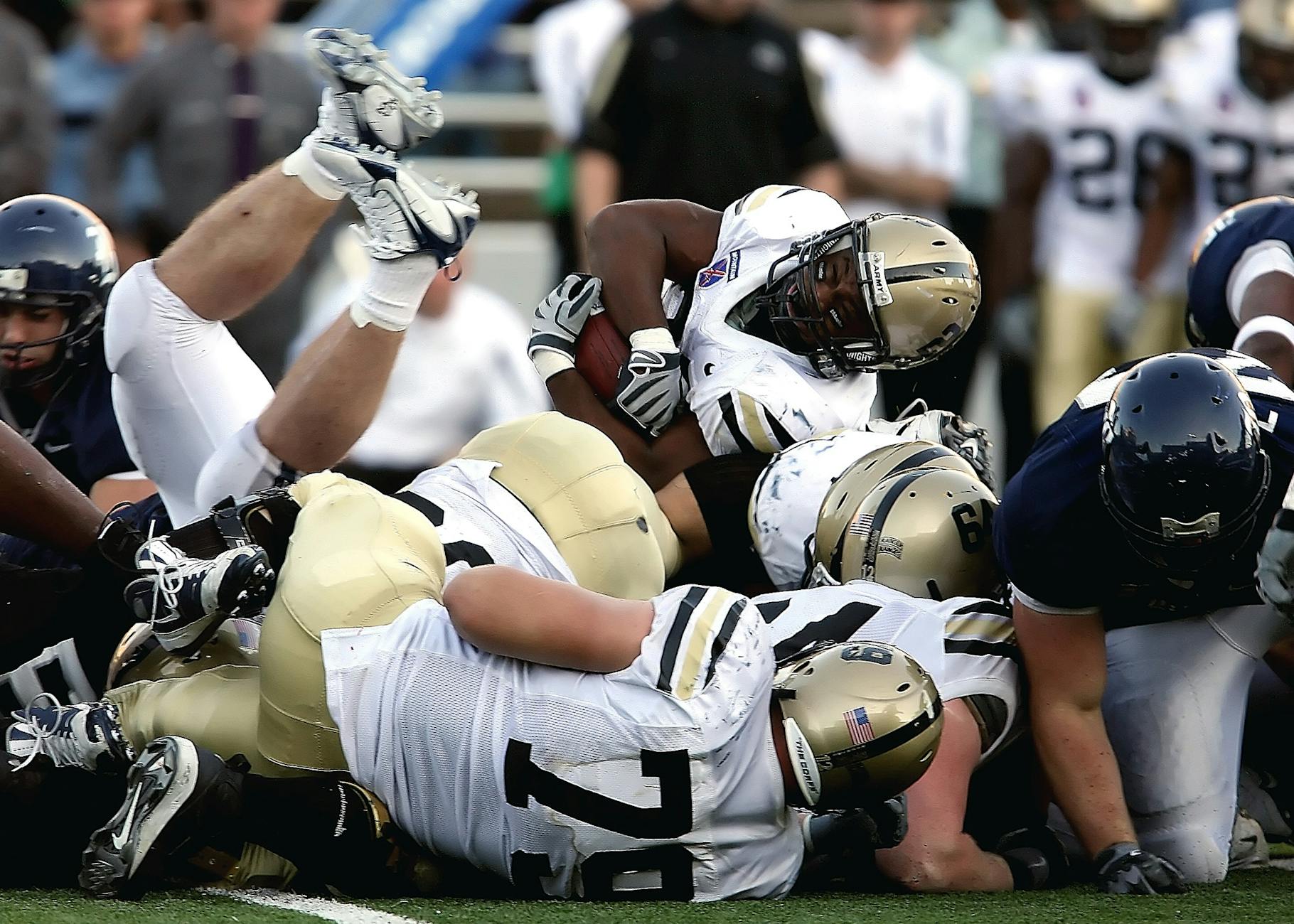
Photo by Pixabay on Pexels
The most valuable improvement is immediate: calculate the break-even probability, verify the schedule, check personnel, and stake consistently.
Frequently Asked Questions
Q: What is college football?
A: College football is American football played by university teams, primarily under NCAA competition in the United States. The highest-profile level is Football Bowl Subdivision, or FBS, which includes conferences such as the ACC, Big Ten, Big 12, and SEC. FBS teams compete during the regular season, conference races, bowl games, and the College Football Playoff, while FCS programs compete in a separate championship structure. Rules, eligibility, scheduling, and postseason systems can change, so readers should verify current information through NCAA and conference sources.
Q: How do you start analyzing a college football game?
A: Start by confirming the matchup, venue, kickoff time, and current odds before studying team form. Next, compare opponent-adjusted offense and defense, quarterback availability, offensive-line continuity, rest, travel, weather, and motivation. Convert your estimated probability into a fair price, then compare it with the available market number. If the advantage is too small to withstand uncertainty, record a no-bet decision instead of forcing action.
Q: What is the difference between FBS and FCS college football?
A: FBS and FCS are two NCAA football subdivisions with different competitive and postseason structures. FBS programs generally receive greater media attention and compete for bowl eligibility and the College Football Playoff, while FCS teams enter a playoff tournament for the national championship. The distinction also affects scholarships, scheduling, roster depth, and market coverage. A bettor should avoid treating FCS statistics as directly interchangeable with FBS statistics without an adjustment.
Q: Is betting college football worth it?
A: College football betting is worth considering only when the activity is legal, affordable, and approached as entertainment or probability analysis rather than guaranteed income. Prices vary widely because injuries, transfers, coaching changes, and uneven schedules create uncertainty. However, those same variables can make markets less straightforward than professional football markets. Use fixed stakes, maintain a results ledger, and never chase losses after an upset or late line movement.
Q: Why does a college football bet lose after my team dominates?
A: A bet can lose despite dominance because the point spread, total, or moneyline reflects price rather than simple superiority. A favorite that wins by 10 points against a spread of -14 has won the game but lost the spread wager. Turnovers, red-zone failures, garbage-time scoring, missed kicks, and late injuries can also separate process quality from the final margin. Review the closing number and your original assumptions before deciding whether the loss was variance or analytical error.
Q: How much money should you stake on college football?
A: A conservative staking plan uses one unit equal to approximately 0.5% to 1% of a dedicated entertainment bankroll, with a maximum predetermined exposure per day. Flat staking is easier to audit, while fractional Kelly sizing can be used only by bettors with reliable probability estimates and strong discipline. Do not use rent, tuition, emergency savings, or borrowed funds. The precise amount is less important than maintaining the same rule after both winning and losing weeks.
Q: What should you do when college football injury news is unclear?
A: When important injury news is unresolved, reduce the stake or pass until the player’s status and replacement role are confirmed. Recheck official team communications, credible local reporting, weather, and the market’s price movement near kickoff. Do not assume a backup quarterback is interchangeable with a starter because the team’s average points remain unchanged. If the uncertainty is larger than your calculated edge, no bet is the mathematically superior decision.
The discipline is simple to state and difficult to fake: verify the facts, calculate the price, respect uncertainty, and keep your bankroll intact. Want to continue with sharper college football analysis and daily data-led coverage?
End of Article · Pitch Notes