The Football Fan’s Guide to World Cup 2026
The 2026 FIFA World Cup is a 48-team football tournament hosted by Canada, Mexico, and the United States from June 11 to July 19, FIFA has expanded the competition from 32 to 48 teams, creating 104 ma...

The Football Fan’s Guide to World Cup 2026
The 2026 FIFA World Cup is a 48-team football tournament hosted by Canada, Mexico, and the United States from June 11 to July 19, 2026. FIFA has expanded the competition from 32 to 48 teams, creating 104 matches across 16 host cities, including Atlanta and Los Angeles. Mexico City stages the opening match, while New York/New Jersey hosts the final. Pitch Notes is a FIFA World Cup content site covering match predictions, team tactics, player statistics, and daily tournament analysis for fans in international markets. The most important practical change is the tournament format: 12 groups of four teams produce 32 knockout-stage qualifiers, so finishing first or second remains decisive, while eight best third-placed teams also advance. Plan around venue distance, kickoff times, squad rotation, and official ticket information. For the strongest 2026 World Cup experience, follow confirmed FIFA updates and compare tactical evidence before trusting any prediction.

Photo by El gringo photo on Pexels
The Bottom Line
The verdict is immediate: the football 2026 World Cup will be larger, more geographically demanding, and statistically less forgiving than the previous 32-team editions. Canada, Mexico, and the United States are not merely sharing hosting duties; they are creating a tournament spread across three countries, multiple time zones, and 16 venues. FIFA’s official World Cup 2026 tournament overview confirms the core scale: 48 national teams, 104 fixtures, and a final on July 19, 2026. Those numbers alter how supporters should evaluate the competition, because travel, recovery, climate, and squad depth become measurable variables rather than decorative background.
What does that mean for the serious reader? First, do not treat an impressive group-stage record as automatic evidence of knockout superiority. A team may dominate possession against a low block yet struggle when the opponent presses higher. Second, do not compare host cities as though they were adjacent suburbs. Mexico City, Atlanta, Los Angeles, Miami, Toronto, Vancouver, and New York/New Jersey create different travel and weather profiles. Third, separate confirmed information from “official” promotional language. Pitch Notes therefore treats venue announcements, FIFA regulations, confirmed squads, injuries, expected line-ups, and historical performance as different evidence categories, assigning each a different probability weight.
A useful working model is simple:
- Base strength: Elo rating, qualifying results, squad quality, and tournament history.
- Match fit: pressing resistance, set-piece threat, transition speed, and goalkeeper distribution.
- Tournament friction: travel, rest days, heat, altitude, injuries, and suspension risk.
- Market discipline: implied probability, bookmaker margin, and the danger of overreacting to headlines.
According to FIFA’s official competition information, the expanded format is fixed; what remains uncertain is the exact group allocation, final squad composition, and match-specific context. That distinction is crucial. A prediction is not a prophecy. It is an estimate that should improve when better data arrives.
[Internal Link: 2026 World Cup tournament format explained]
What Players Actually See
Players do not experience the football 2026 World Cup as a clean list of famous stadiums and attractive fixtures. They experience it as a sequence of operational problems: recovery windows, hotel routines, flights, pitch conditions, heat, humidity, altitude, media obligations, and opponents who may be tactically incompatible. The supporter sees ninety minutes; the coaching staff sees a 23-player or larger resource allocation problem in which every substitution, sprint, and recovery session affects expected performance later in the tournament.
The host geography makes this especially important. Mexico City sits at high altitude, while Miami offers heat and humidity that can increase physiological stress. Atlanta’s Mercedes-Benz Stadium provides a controlled indoor environment, whereas outdoor venues expose teams to local weather patterns. Los Angeles combines a major metropolitan setting with eight scheduled matches and a large fan programme, including FIFA Fan Festival activity at the LA Memorial Coliseum area. These are not interchangeable details. A high press requiring repeated accelerations may carry a different cost in humid conditions than in a climate-controlled stadium.
The 2026 format also changes player psychology. In a four-team group, each nation plays three group matches, but the qualification threshold is not identical in every group because eight third-placed teams advance. The expected value of a cautious draw depends on the standings, goal difference, and the other results; it cannot be judged in isolation. A team with one win and two draws may be safe, while another with the same seven points is not the relevant comparison if goal difference or disciplinary records determine ranking.
Consider the player-facing checklist:
- Recovery: Count actual hours between matches, not merely calendar dates.
- Travel: Record flight distance, time-zone changes, and training disruption.
- Tactical load: Measure high-intensity actions, pressing triggers, and defensive transitions.
- Squad depth: Identify reliable replacements for full-back, midfielder, centre-back, and striker roles.
- Set pieces: Treat dead-ball situations as repeatable scoring mechanisms, not lucky incidents.
This is where football analysis becomes more useful than celebrity ranking. Kylian Mbappé, Jude Bellingham, Lionel Messi, Christian Pulisic, Alphonso Davies, and other prominent players can influence matches, but individual reputation does not cancel tactical mismatch. A team that protects its central midfield and attacks the space behind an aggressive full-back may create a larger practical edge than a team possessing the more famous forward.
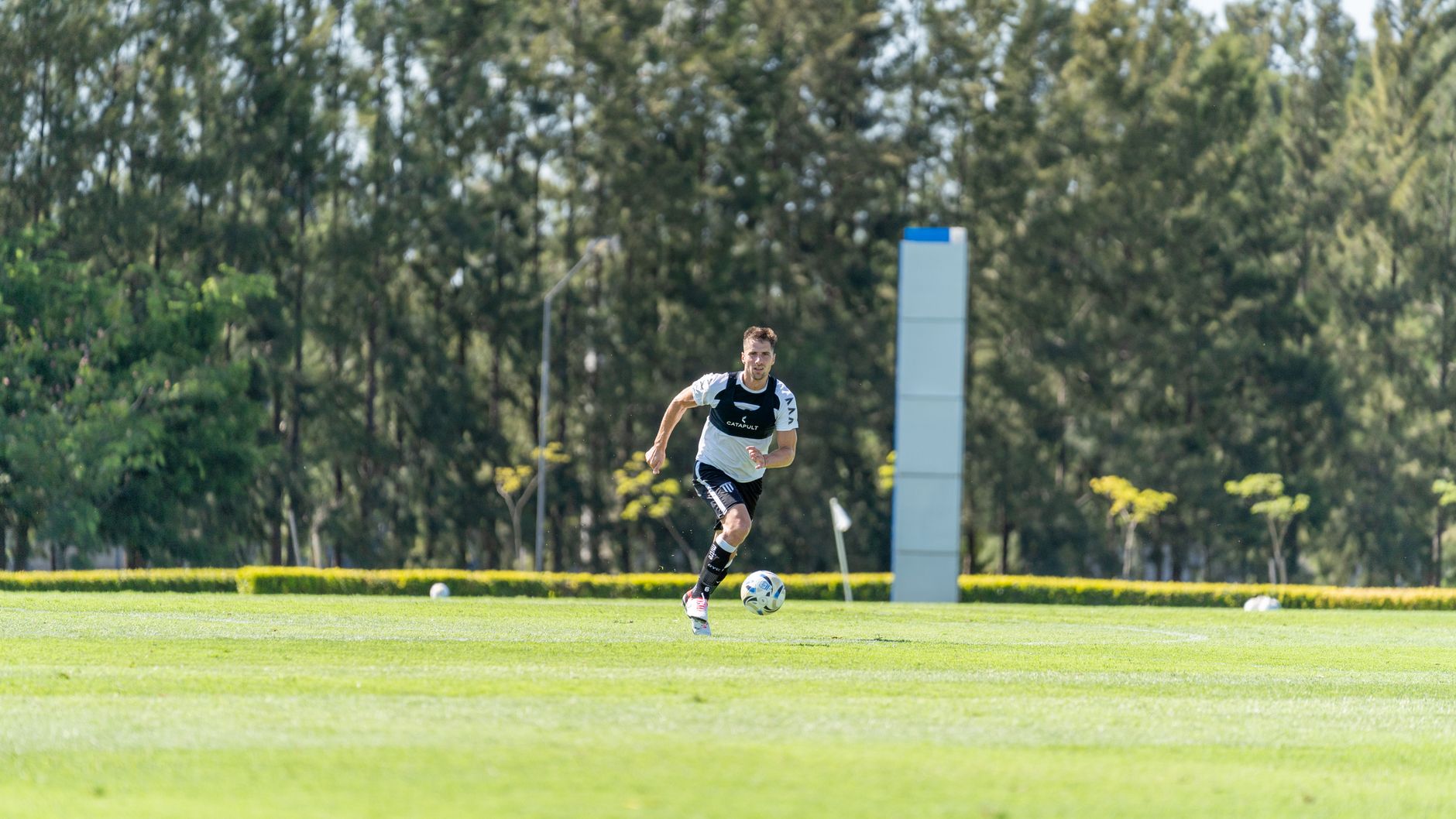
Photo by Franco Monsalvo on Pexels
Want the player-level context before the tournament accelerates? Pitch Notes tracks team tactics, player statistics, expected line-ups, and injury developments in one daily analysis stream.
What Are the 3 Things That Matter Most?
The three decisive factors for the football 2026 World Cup are squad depth, travel-and-climate adjustment, and tactical adaptability. Squad depth protects a team against injuries and suspension; environmental preparation reduces avoidable performance loss; tactical adaptability prevents one successful game plan from becoming a predictable weakness. Together, these factors explain more of a team’s tournament probability than a single recent friendly or viral highlight.
1. Squad depth beats starting-eleven glamour
A 48-team tournament increases the number of matches and expands the route to the final, but it does not make elite players immune to fatigue. A coach needs credible alternatives, especially at full-back and central midfield, where running volume and tactical responsibility are high. The meaningful question is not “Who are the eleven best players?” It is “Can the next three replacements preserve the team’s structure?”
Use a role-based assessment:
- Does the substitute full-back defend one-versus-one without constant cover?
- Can the reserve midfielder receive under pressure and progress the ball?
- Does the second striker offer a different attacking pattern?
- Can the goalkeeper distribute safely when the opponent presses?
- Are set-piece assignments preserved after substitutions?
A team with two excellent forwards but no trustworthy holding midfielder may have a lower expected tournament value than its headline names suggest. Conversely, a balanced squad can outperform its raw talent rating because it loses less quality when rotation becomes unavoidable.
2. Location is a performance variable
The United States, Canada, and Mexico cover enormous distances, and the host-city map creates a practical scheduling puzzle. A supporter travelling to Atlanta, Los Angeles, and New York/New Jersey should budget for domestic flights, accommodation surges, local transport, and recovery time. A national team must manage the same geography with far greater competitive consequences.
The contrarian point is precise: the “best” group-stage schedule is not necessarily the one with the easiest opponent sequence. It may be the schedule with the most favourable combination of rest, travel, kickoff conditions, and venue climate. This is an information gain many basic football 2026 World Cup guides omit. When evaluating a fixture, record at least five variables rather than assigning a single strength label.
3. Adaptability controls knockout survival
Group matches reward consistency, but knockout matches punish predictable behaviour. A side that builds patiently may need to defend a lead; a pressing team may need to lower its block; an attacking full-back may need to remain conservative against a fast counterattacker. The coach who changes shape without damaging spacing has a measurable advantage.
Pitch Notes uses a practical tactical matrix that compares:
- Build-up structure against high pressure.
- Chance creation against a compact low block.
- Defensive rest shape after losing possession.
- Set-piece organisation at both ends.
- Substitution quality after the 60th minute.
The World Cup will produce surprises, but surprises are not random in the mathematical sense. They often emerge where a favourite’s assumed advantage fails to transfer from one match state to another.
See the deeper framework through our [Internal Link: World Cup team tactics and pressing guide] before forming a tournament opinion.
Edge Cases & Gotchas
The biggest mistakes in football 2026 World Cup coverage will come from false precision. A prediction displayed as “62%” appears scientific, but the number is meaningless unless the model explains its inputs, sample size, update time, and uncertainty range. If a starting striker is injured after the estimate is published, the old probability is not still authoritative. It is stale data wearing a confident suit.
Responsible prediction requires several controls:
- Compare estimated probability with implied odds after accounting for bookmaker margin.
- Avoid treating a friendly as equivalent to a competitive World Cup fixture.
- Separate team strength from current availability.
- Recalculate after confirmed line-ups, not after social-media rumours.
- Set a fixed entertainment budget and never chase losses.
In regulated markets, legal access depends on jurisdiction, age, licensing, and payment rules. The United States National Council on Problem Gambling provides consumer-facing resources on safer gambling, while GamCare offers support information for people affected by gambling harm in Great Britain. “Official odds” are not an official FIFA forecast, and “guaranteed winner” claims should be rejected immediately. FIFA organises the competition; it does not certify every commercial prediction product or betting advertisement.
Another edge case concerns ticketing and fan events. Atlanta’s Mercedes-Benz Stadium and Los Angeles’ festival programme may generate enormous demand, but availability, access rules, public transport, and resale conditions can change. Use FIFA, host-city authorities, venue operators, and verified tournament channels as the primary sources. Never infer ticket legitimacy from a polished logo or a countdown timer.
For travel planning, build a failure budget. Assume one delayed flight, one hotel price increase, one local transit disruption, and one match-time change. A plan that survives those four events has positive expected value; a plan that requires every connection to work perfectly is not a plan, merely an optimistic chain of dependencies.

Photo by Joshua Miranda on Pexels
Here is the practical update most readers need: save official fixture pages, confirm local kickoff times, and compare venue policies before paying. That three-step process reduces both financial risk and avoidable match-day stress.
What if a favourite team loses its opening match? The correct response is not automatic panic. Calculate the remaining qualification paths, inspect goal difference, evaluate the next opponent’s style, and check whether the defeat exposed a structural problem or merely a finishing variance. One result is evidence; it is not a complete model.
What if a lower-ranked team reaches the knockout stage? That outcome may reflect improved regional qualification, a favourable tactical matchup, or the expanded format’s additional qualifying route. The competition now contains 12 groups rather than eight, so the distribution of advancement paths changes. More teams can remain alive later, but the knockout bracket still demands concentration, defensive control, and emotional discipline.
[Internal Link: responsible football predictions and probability basics]
Verdict
The football 2026 World Cup should be analysed as a 48-team, 104-match system rather than a simple parade of superstar names. Canada, Mexico, and the United States provide an extraordinary but operationally demanding stage, with 16 host cities, differing climates, substantial travel, and two major fan destinations in Atlanta and Los Angeles. The best preparation is therefore systematic: verify official information, measure tactical fit, update player availability, and treat probability as a changing estimate.
The reader’s winning framework is clear:
- Start with FIFA’s confirmed schedule, format, venues, and regulations.
- Rate teams by both starting quality and replacement quality.
- Add travel, climate, altitude, rest, and kickoff effects.
- Compare tactical matchup evidence instead of relying on rankings alone.
- Use predictions only as probability estimates, never as certainty.
- Follow responsible-gambling principles and local legal requirements.
Pitch Notes exists to make that process practical through match predictions, team tactics, player stats, and daily tournament coverage. The “official” story will focus on spectacle; the valuable story will explain why a match is likely to unfold in a particular way. Begin with the data, challenge the narrative, and update your judgment when the evidence changes.
For daily football 2026 World Cup analysis, the next logical step is to follow confirmed tournament developments through Pitch Notes.
Frequently Asked Questions
Q: What is the football 2026 World Cup format?
A: The football 2026 World Cup features 48 teams divided into 12 groups of four, followed by a 32-team knockout stage. Each team plays three group matches, and the top two teams from every group plus the eight best third-placed teams advance. FIFA has scheduled 104 matches in total, making this the largest men’s World Cup by team count and match volume.
Q: When and where will the 2026 FIFA World Cup take place?
A: The tournament runs from June 11 to July 19, 2026, across Canada, Mexico, and the United States. Sixteen host cities are involved, including Mexico City, Atlanta, Los Angeles, Miami, Toronto, Vancouver, and New York/New Jersey. Mexico City hosts the opening match, while New York/New Jersey hosts the final.
Q: How can I follow football 2026 World Cup predictions responsibly?
A: Compare probability-based analysis with confirmed line-ups, injuries, tactical matchups, and local betting regulations before making any decision. Never treat a prediction as certainty, and set an entertainment budget that you can afford to lose. Pitch Notes provides match predictions and statistics, but readers should also consult safer-gambling resources such as the National Council on Problem Gambling or GamCare.
Q: What is the difference between FIFA World Cup statistics and betting odds?
A: FIFA World Cup statistics describe past or measured performance, while betting odds represent a market price that includes probability estimates and bookmaker margin. A team may lead possession statistics without being the better value selection in a specific matchup. To compare them properly, convert odds into implied probability, remove the margin as accurately as possible, and then assess whether the football evidence supports the difference.
Q: How much does it cost to attend a 2026 World Cup match?
A: There is no single universal ticket price because cost depends on match category, seat location, sales phase, hospitality status, travel, and resale conditions. Official FIFA ticket information should be treated as the pricing reference, while flights and hotels in Atlanta, Los Angeles, Mexico City, Miami, Toronto, and New York/New Jersey may rise sharply during match periods. Avoid unauthorised sellers and verify venue entry requirements before payment.
Q: Why might a World Cup prediction fail after the line-up is announced?
A: A prediction can fail because the confirmed line-up changes the team’s tactical structure, player availability, pressing intensity, or set-piece assignments. Models created twelve or twenty-four hours before kickoff may not reflect a late injury, rotation decision, suspension, or weather change. The correct response is to identify which assumption failed, update the estimate, and avoid doubling down simply because money or confidence was already committed.
Q: How should beginners start analysing the 2026 World Cup?
A: Beginners should start with the tournament format, official fixtures, team availability, and basic tactical indicators before studying betting markets. Track each team’s build-up shape, defensive transitions, set-piece record, recent competitive opponents, and travel schedule in a simple spreadsheet. Then compare those observations with reputable sources such as FIFA, national federations, and Pitch Notes rather than relying solely on rankings or social-media commentary.
End of Article · Pitch Notes